Cutting Through the Confusion: Saw Blade Metallurgy Basics
Why Material Matters
Each clean cut starts at the metal-workpiece interface. If the cutting edge of your blade can’t take the friction, heat, and torque of a cut, it will break down. The right blade material is the difference between a saw that cuts cleanly through wood and one that burns its way through by friction.
The High Cost of the Wrong Cut
Workshop headaches can come from the wrong blade:
- Tool Damage: Dulls fast, chips teeth, and warps blades.
- Poor Finishes: Large burrs, burn marks, and splinters.
- Safety Issues: Extreme kickback, motors stall, and flying carbide shards.
The Contenders at a Glance
- High-Speed Steel (HSS): A solid steel blade that is flexible, tough and easy to sharpen.
- Tungsten Carbide-Tipped (TCT): Heavy-duty steel body with ultra-hard carbide teeth brazed on the tips for speed and heat resistance.
Meet the Workhorse: HSS Saw Blades
What Is High-Speed Steel?
HSS blades are made from one solid piece of alloy steel with tungsten, molybdenum, vanadium and chromium. This gives uniform strength and hardness from the center hole to the cutting point.
Key Advantages
- High Toughness: Bends but does not break, absorbs sudden shocks and vibrations.
- Easy Resharpening – Can be ground many times with standard shop grinding wheels.
- Affordable: Lower cost of initial purchase.
Disadvantages
- Low heat tolerance: Softens at >500°C to 600°C.
- Hard Materials with Shorter Lifespan: Dulls quickly when cutting dense hardwoods or abrasive composites.
Best Used For:
- Cold saws: low speed.
- Structural: Mild steel tube, solid bar stock.
- Burr-free precision cuts of non-ferrous metals.
Meet the Heavyweight: TCT Saw Blades
What Is a TCT Blade?
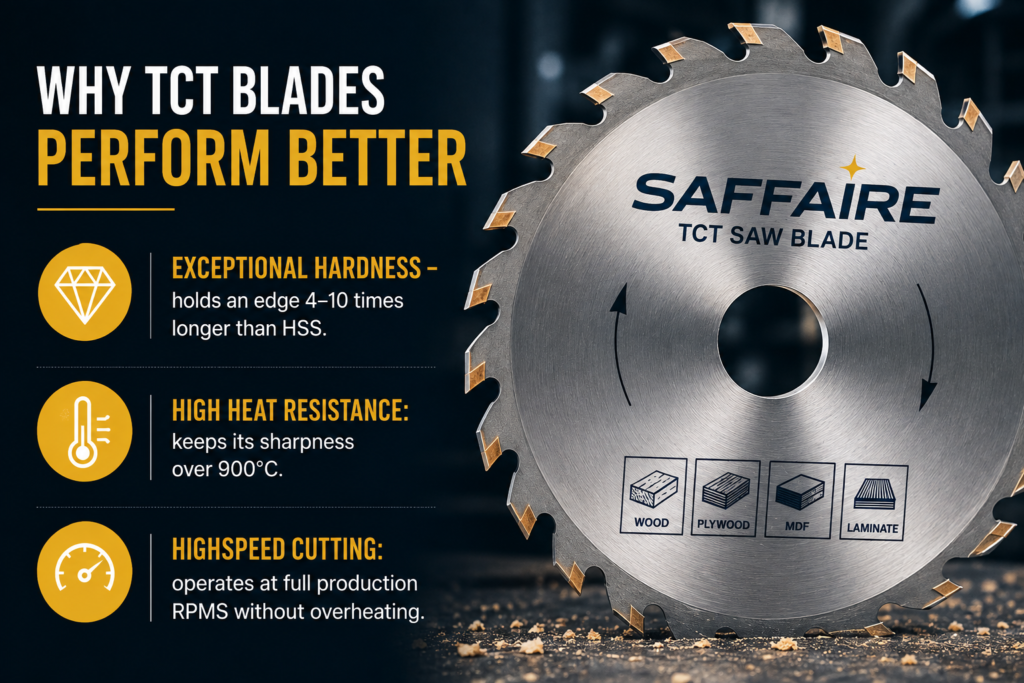
TCT blades feature individual carbide teeth (tungsten carbide bonded with cobalt) that have been brazed onto a strong steel plate. It has a flexible core and extremely hard cutting edges.
Key Advantages
- Exceptional Hardness – holds an edge 4-10 times longer than HSS.
- High heat resistance: keeps its sharpness over 900°C.
- High-Speed Cutting: Operates at full production rpms without overheating.
Drawbacks
- Brittle Teeth: They are easily chipped if dropped or if they strike foreign metal (such as nails).
- Expensive Costly to purchase, and requires specialised diamond grinding wheels for service.
Best Used For:
- Table saws, mitre saws, panel saws (high speed).
- Hardwoods. Softwoods. Plywood. MDF.
- Heavy industrial aluminium and composite fabrication.
Head-to-Head Comparison
| Feature | HSS Blades | TCT Blades | Winner |
| Cutting Speed | Low RPM (20–150 RPM typical for steel) | High RPM (3,000+ RPM) | TCT |
| Edge Retention | Moderate; needs frequent touch-ups | Long; resists wear and abrasive resins | TCT |
| Impact Resistance | High; flexes under interrupted cuts | Lower; teeth can chip under hard impacts | HSS |
| Sharpening | Simple in-house grinding | Requires specialized CNC diamond service | HSS |
| Initial Cost | Budget-friendly | Premium pricing | HSS |
| Cost per Cut | Higher in production settings | Lower over long-term production | TCT |
Material Compatibility Guide
- Structural Mild Steel: Use HSS on slow-speed cold saws to keep heat down.
- Solid Woods & Softwoods: Use TCT for fast, tear-free cuts without pitch buildup.
- Abrasive Composites (MDF/Laminates): Use TCT; the glues will ruin HSS instantly.
- Aluminum Extrusions: Use TCT with a negative rake angle to prevent grabbing.
- Thin-Walled Stainless Tubing: Use HSS to handle high chip-load variations without chipping.
How to Choose the Right Blade for Your Shop
- If you are using a standard mitre or table saw (3,000+ RPM), stick with TCT.
- Choose your materials: TCT is required for wood, plastics, composites and aluminium. HSS is needed for mild structural steel and pipe cutting on cold saws.
- Consider a hybrid approach: Fabricators often run HSS on dedicated metal cutting cold saws and use TCT throughout their carpentry and finishing equipment.
Pro Tips to Extend Blade Life
- Match Your Feed Rate: Don’t push too fast (smashes teeth) or feed too slow (causes rubbing and heat build-up).
- Lubricate the Metal: Wash out chips and protect cutting edges with flood coolant or mist spray.
- Clean the pitch on a regular basis: Use special blade cleaners to get rid of the baked-on resin from the wood blades to prevent drag.
- Store Carefully: Hang blades on wooden pegs or store in divided trays. Never stack blades bare on top of each other.